
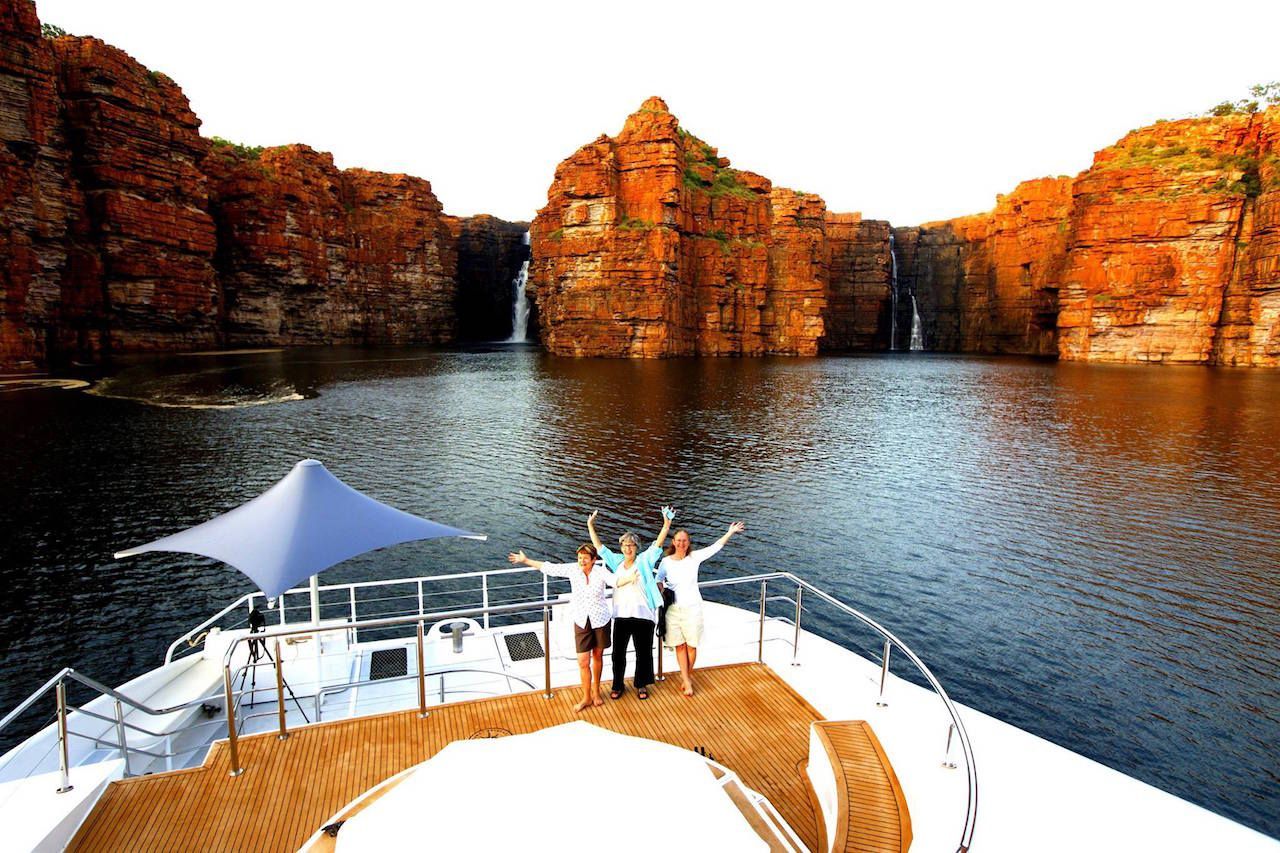

The Kimberley region sits in a strange category of Australian geography — vast, ancient, and almost entirely without roads, yet increasingly on the radar of travellers seeking one of the country’s most rewarding wilderness experiences. Cruising remains the only realistic way to see the bulk of it up close, and a growing number of operators now offer this in genuine comfort, without sacrificing the remoteness that makes the region so compelling in the first place. Understanding what “luxury” actually means in this context — and what to expect from the Kimberley coast more broadly — helps set realistic expectations before booking.
Why the Kimberley Demands a Different Kind of Cruise
At roughly 423,000 square kilometres, the Kimberley is larger than several European countries combined, yet it has a permanent population in the tens of thousands. Its coastline is defined by some of the most extreme tidal ranges on Earth — in places, over ten metres between high and low tide — which shapes almost everything about how the region can be explored. Roads are sparse and often impassable during the wet season, meaning sea and air remain the only practical ways to access much of the coastline.
This combination of scale, tidal extremity, and near-total lack of infrastructure is precisely why Kimberley cruising has developed such a distinct character compared with cruising elsewhere in Australia. Vessels need to be built for shallow-water manoeuvring, tender operations need to work around tidal windows that shift daily, and itineraries need built-in flexibility because conditions genuinely dictate what’s possible on any given day.
What “Luxury” Looks Like in a Genuinely Remote Setting
Luxury in the Kimberley context tends to mean something different from luxury on a conventional cruise. There’s rarely a formal dining room with a dress code or an extensive entertainment program — instead, the premium experience is built around access, comfort, and expertise. Well-appointed cabins, high-quality food using fresh and often local produce, knowledgeable expedition staff, and small group sizes that allow genuinely personalised excursions all sit at the centre of what a high-end Kimberley voyage delivers.
Some cruise companies also incorporate elements like helicopter flights over otherwise inaccessible gorges and waterfalls, private beach landings, and flexible daily itineraries shaped around tidal windows and wildlife activity rather than a fixed printed schedule. Cruise companies such as True North have built their entire vessel design around this kind of access, carrying a helicopter and small tender fleet specifically so guests can reach terrain a conventional ship never could. This is where the real value of “luxury” shows up — not in gold-plated fittings, but in the ability to get somewhere remarkable in comfort, with expert guidance, and without the itinerary rigidity of a larger ship.
Signature Experiences Along the Kimberley Coast
Several features consistently appear on well-designed Kimberley coast cruise itineraries, and they’re worth understanding before comparing operators:
- Horizontal Falls-style tidal phenomena, where the tide forces water through narrow gorge openings with dramatic force
- Ancient Aboriginal rock art galleries, some estimated to be tens of thousands of years old
- King George Falls and similar dramatic waterfall systems, best viewed at the top of the tide
- Saltwater crocodile sightings, a genuine feature of the region’s ecosystem rather than a staged attraction
- Freshwater swimming holes accessible via short hikes from certain anchorages, when conditions allow
Each of these features depends heavily on timing — tides, season, and daylight all play a role — which is why a well-run operator builds real flexibility into the schedule rather than locking in a fixed itinerary regardless of conditions.
Timing a Kimberley Voyage
The Kimberley’s dry season, generally running from around April through to October, is the only realistic window for most coastal cruising in the region. Outside this period, monsoonal weather makes much of the coastline inaccessible and considerably more dangerous to navigate. Within the dry season, timing still matters — early season (April–May) tends to bring higher water levels and more dramatic waterfalls, while later in the season (August–October) offers drier conditions and often clearer visibility for wildlife viewing and photography.
Anyone planning to cruise the Kimberley in luxury should factor this seasonal nuance into their booking decision, since the character of the landscape genuinely shifts across the dry season window.
What to Expect Onboard a Luxury Kimberley Vessel
Given the remoteness of the region, most vessels operating Kimberley itineraries are self-sufficient for extended periods, carrying their own water treatment, power generation, and food storage systems. Cabin configurations tend to be smaller in number but well-appointed, often with private balconies or large windows to take advantage of the coastal scenery. Public areas typically include an outdoor deck suited to wildlife spotting, a dining area serving meals built around fresh and regional produce, and space for daily briefings covering the following day’s activities.
Days generally combine morning and afternoon excursions — via tender, kayak, or occasionally helicopter — with rest periods onboard during the hottest part of the day. Expedition staff, often with backgrounds in marine biology, geology, or Aboriginal cultural heritage, typically lead these excursions and provide context that significantly deepens the experience compared with a purely scenic cruise.
Questions to Ask Before Booking a Kimberley Cruise
Given the premium price point typically associated with Kimberley cruising, it’s worth asking a few pointed questions before committing:
- How many passengers does the vessel carry, and what’s the ratio of guests to expedition staff?
- Are excursions included in the fare, or charged as optional extras?
- Does the itinerary include any helicopter or seaplane components, and are these guaranteed or weather-dependent?
- How does the operator handle itinerary changes due to tide or weather?
- What’s the cabin configuration, and how does pricing vary by cabin category?
The answers to these questions tend to reveal a great deal about the overall quality and value of a given voyage, particularly around group size and guide expertise — two factors that matter more in the Kimberley than almost any other Australian cruising region.
Why the Investment Tends to Be Worth It
Kimberley cruising sits toward the premium end of Australian domestic travel, and it’s fair to ask whether that expense is justified. For most travellers who’ve done it, the answer comes down to genuine irreplaceability — there’s no other reasonable way to see this landscape, and the region’s remoteness means visitor numbers remain naturally low compared with more accessible parts of the country. That combination of scarcity, scale, and genuine wilderness is difficult to replicate anywhere else in Australia, which is ultimately what justifies the cost for those who choose to make the trip.
Planning Ahead
Because cabin numbers on Kimberley vessels are inherently limited and demand for dry-season departures is strong, early booking is worth prioritising, particularly for peak months. Travellers should also budget time either side of the cruise for connecting flights, given that most Kimberley departures originate from regional airports with limited daily services. With the planning handled well in advance, a Kimberley voyage remains one of the more genuinely unique travel experiences available anywhere in Australia — a landscape that rewards patience, careful timing, and a willingness to let the itinerary bend to the tide rather than the clock.

Comments are closed.